LIHI Certificate #175 - Upper Gorham Project, New Hampshire
| Project Name | Upper Gorham |
| LIHI Certificate No. | 175 |
| LIHI Certificate Term | August 31, 2026 – August 30, 2036 |
| Owner | Great Lakes Hydro America, LLC, a subsidiary of Brookfield Renewable Energy Group |
| State | New Hampshire |
| Location | River Mile 133.2 – Androscoggin River |
| Installed Capacity | 4.8 MW |
| Average Annual Generation | 14,661 MWh |
| Facility Type | Run of river |
| FERC No. | P-2311, issued in 2025, expires 08/31/2065 |
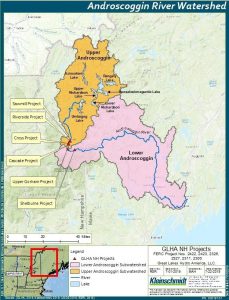
The Upper Gorham Project is located on the Androscoggin River in Coos County, northern New Hampshire. The Androscoggin River is runs through the states of New Hampshire and Maine. The river joins the Kennebec River at Merrymeeting Bay in Maine before emptying into the Gulf of Maine and subsequently the Atlantic Ocean. The Androscoggin River watershed contains 19 hydroelectric projects located along the 178-mile-long river.
The Project is one of several hydroelectric projects within an 11-mile reach of the Androscoggin River between Berlin and Shelburne, New Hampshire including upstream projects: Cross Power (LIHI #174), Cascade (LIHI #188) and Sawmill (LIHI #173), and two downstream projects: Gorham (LIHI #153), and Shelburne (LIHI #176).
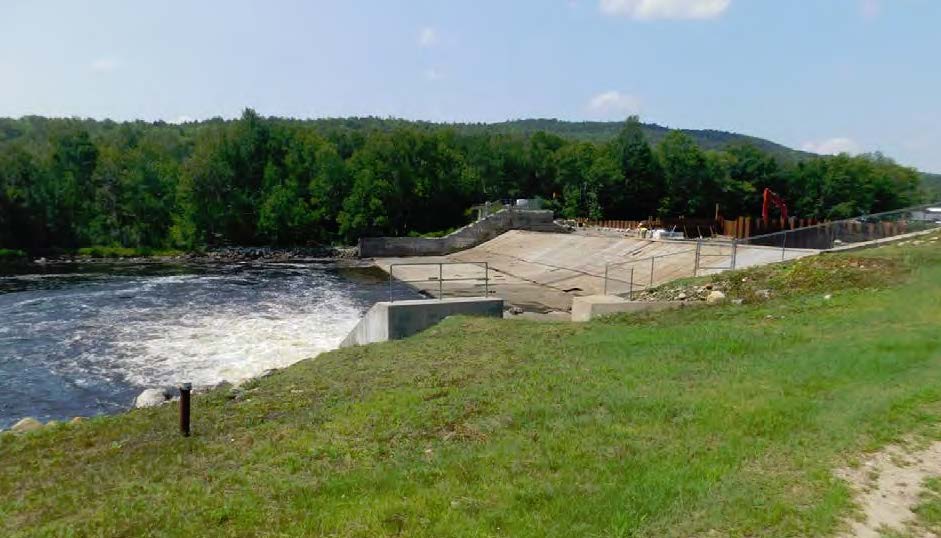
The project includes a dam originally constructed in 1904, power canal, powerhouse, four turbines, and transmission equipment. The dam is 775 feet long with a maximum height of 31feet and is comprised of:
- A 133-foot-long earthen dike with a concrete core wall.
- A 300-foot-long by 18-foot-high rock-filled and timber-crib spillway section with 5-foot-high flashboards.
- A 122-foot-long power canal head gate section, topped with a gatehouse 113 feet long by 16 feet wide, with eight operable and two inoperable stop-log gates, each approximately 7.5 feet wide. Trashracks have 3 1/8-inch clear spacing.
- A 220-foot-long earthen dike with a concrete core wall.
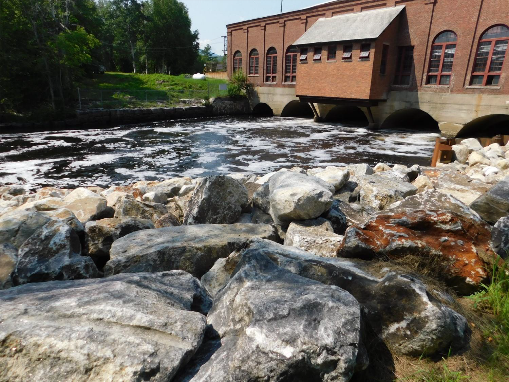
The power canal is 3,350-foot long, 100 feet wide and 18 feet deep. The brick and steel powerhouse contains four horizontal generators and four horizontal Francis turbines for a total combined capacity of 4.8 MW.
The project operates in a quasi-run-of-river mode and impounds a 45-acre reservoir. The impoundment is allowed to fluctuate over a 6-inch range. The project provides a minimum flow of 400 cfs into the 1-mile-long bypass reach throughout trout spawning season (March 1 – June 15) to optimize trout habitat. The rest of the year a 200 cfs minimum flow is provided. This flow regime was developed in consultation with US Fish and Wildlife Service (USFWS) and the New Hampshire Department of Environmental Services (NHDES).
Waters within the project reach are designated as Class B, suitable for fishing, primary contact recreation, and water supply after treatment. The project waters are listed as impaired due to prior discharges from several paper mills. Given run-of-river operations, the project is unlikely to adversely impact water quality.
The Androscoggin River is not accessible to diadromous fish species in the project reach due to downstream natural falls – Lewiston and Rumford Falls. American eel are present in the lower reaches of the Androscoggin River though none have historically reached the upper sections of the river. The project area supports cold-water fishery habitat. New Hampshire Department of Fish and Game annually stocks brook, rainbow, and brown trout upstream of the projects. Resident river species include fallfish, smallmouth bass, white sucker, longnose dace, common shiner, spottail shiner, and yellow perch. Downstream passage can occur by means of spillway flow, low-level gate releases, and power intake flow through the trashracks. The project does not impede the successful completion of resident fish life cycles.
The project lands are limited to the area occupied by project infrastructure. Lands surrounding the project include developed areas to the west along Route 16 in the Gorham Upper Village and an abandoned railroad to the east. The project is subject to the New Hampshire Shoreland Water Quality Protection Act which governs shoreland uses within a 250-foot buffer of the high-water mark. Further, the project’s run-of-river operations provides protection of the shoreline areas.
Threatened or endangered species potentially present in the project vicinity include the Northern long-eared bat, Canada lynx, and proposed for listing tri-colored bat and monarch butterfly. The state-listed peregrine falcon may also be present. The project avoids removing trees from April 15 through October 31, unless emergency tree removal for public safety is necessary.
The project dam, gatehouse, powerhouse, and machinery are eligible for National Register of Historic Places (NRHP) listing. No Native American lands, known as traditional cultural properties, or NRHP-eligible tribal resources are present within the Project boundary. The project operates under a Programmatic Agreement (PA) in consultation with the State Historic Preservation Office. The PA and related Historic Properties Management Plan (HPMP) provides provisions detailing annual monitoring and reporting concerning repair and improvement activities conducted as well as any scheduled activities for the upcoming year.
There are no project recreational facilities. Non-project recreational opportunities at the impoundment include hiking/walking, picnicking, kayaking, fishing, scenic viewing, dog walking, and swimming. The bridge across the river leading to the powerhouse (crossing the bypassed reach) is part of the Mahoosuc Trail, maintained by the Appalachian Mountain Club, and joins the Appalachian Trail on the north side of the river. Those lands are owned by the project and the NH Department of Transportation. Public access is provided free of charge where safe access is available.
Compliance Status
The Certificate includes the following facility-specific conditions:
Condition 1: The Facility Owner shall submit the final Operational Compliance Monitoring Plan (OCMP) to LIHI once it has been approved by resource agencies and FERC. In annual compliance submittals to LIHI the Facility Owner shall submit a summary of all planned and unplanned operational deviations that occurred during the year along with evidence of resource agency consultation and comments received.
Condition 2: The Facility Owner shall submit the final Historic Properties Management Plan (HPMP) to LIHI once it has been approved by the SHPO and FERC. In annual compliance submittals to LIHI, the Facility Owner shall report on any consultation that occurred during the year related to ground-disturbing or other activities subject to the HPMP.
Condition 3: The Facility Owner shall work with the NH Department of Transportation on improvements to the boat access area, and with the Trinity Assembly of God on picnic table replacement when replacement is needed. The Facility Owner shall report to LIHI on the status of the improvements in annual compliance submittals.
2026: Annual reporting for the current Certificate has not yet taken effect.
Certification History
August 18, 2026: The Low Impact Hydropower Institute has preliminarily approved Low Impact recertification for the Upper Gorham Hydroelectric Project. The mid-term review applications and reviewer report are available below. The certification includes three conditions included in the review report to ensure that FERC relicensing implementation measures are timely met. The decision is preliminary pending the 30-day appeal window. Only those who commented on the initial application during the 60-day comment period are eligible to file an appeal. Such appeal needs to include an explanation as to how the Project does not meet the LIHI criteria. Appeal requests can be submitted by email to comments@lowimpacthydro.org with “Upper Gorham Project” in the subject line, or by mail addressed to the Low Impact Hydropower Institute, 68 Harrison Ave Ste 605, PMB 113938 Boston, Massachusetts 02111-1929. All requests will be posted to the website. The applicant will have an opportunity to respond, and any response will also be posted. Requests must be received by 5 pm Eastern time on September 17, 2026. If no appeal requests are received the new certification term will be August 31, 2026 through August 30, 2036.
April 28, 2026: The Low Impact Hydropower Institute has received a complete application (see below) for a mid-term review of the Upper Gorham Project. The Project is one of several LIHI Certified projects located on the upper Androscoggin River in New Hampshire that were issued new FERC licenses in September 2025. In accordance with Section 5.3.4 of the 2nd Edition LIHI Handbook, issuance of a new license constitutes a “material change” and triggers a mid-term LIHI Certification review. LIHI is seeking public comment on this application. Specifically, we are interested in knowing whether you think the Project continues to meet the LIHI Low Impact Certification Criteria, as revised in the 2nd Edition Handbook. Comments that are directly tied to specific LIHI criteria (flows, water quality, fish passage, etc.) will be most helpful, but all comments will be considered. Comments may be submitted to LIHI by e-mail at comments@lowimpacthydro.org with “Upper Gorham Comments” in the subject line, or by mail addressed to the Low Impact Hydropower Institute, 68 Harrison Ave. Ste 605, PMB 113938, Boston MA 02111-1929. Comments must be received by 5 pm Eastern time on June 27, 2026 to be considered. All comments will be posted to the website, and the applicants will have an opportunity to respond. Any response will also be posted.
January 1, 2022: The LIHI Certificate term has been extended in accordance with Revision 2.05 of the LIHI 2nd Edition Certification Handbook issued January 1, 2022. Refer to the facility table above for the new term.
November 30, 2020: The decision to certify the Upper Gorham Project became final after the close of the appeals period on November 27, 2020 with no appeals filed. The Certification term is from August 31, 2020 – August 30, 2025.
October 27, 2020:The Low Impact Hydropower Institute (LIHI) preliminarily approved Low Impact Certification for the Sawmill, Cross Power, Upper Gorham, and Shelburne Hydroelectric Projects located on the Androscoggin River in New Hampshire. This decision is preliminary pending the 30-day appeal window. Only those who commented on the initial application during the 60-day comment period are eligible to file an appeal. Such appeal needs to include an explanation as to how the Project does not meet the LIHI criteria. Appeal requests for one or more of these projects can be submitted by email to comments@lowimpacthydro.org with “Androscoggin River-NH Projects” in the subject line, or by mail addressed to the Low Impact Hydropower Institute, 329 Massachusetts Ave, Suite 6, Lexington, MA 02420. All requests will be posted to the website. The applicant will have an opportunity to respond and any response will also be posted. Requests must be received by 5 pm Eastern time on November 27, 2020. The full application and review report are available below. If no appeal requests are received the certification term for each project will be August 31, 2020 through August 30, 2025.
August 13, 2020: The Low Impact Hydropower Institute has received a complete application for Low Impact Certification of the Sawmill, Cross Power, Upper Gorham and Shelburne Hydroelectric Projects located on the Androscoggin River in New Hampshire. LIHI is seeking public comment on this application. Specifically, we are interested in knowing whether you think the Projects meet the LIHI Low Impact Certification Criteria, as revised in the 2nd Edition Handbook. The application can be found below. Comments that are directly tied to specific LIHI criteria (flows, water quality, fish passage, etc.) will be most helpful, but all comments will be considered. Comments may be submitted to the Institute by e-mail at comments@lowimpacthydro.org with “Androscoggin River-NH Project Comments” in the subject line, or by mail addressed to the Low Impact Hydropower Institute, 329 Massachusetts Avenue, Suite 6, Lexington, MA 02420. Comments must be received on or before 5 pm Eastern time on October 12, 2020 to be considered. All comments will be posted to the web site and the applicant will have an opportunity to respond. Any response will also be posted.